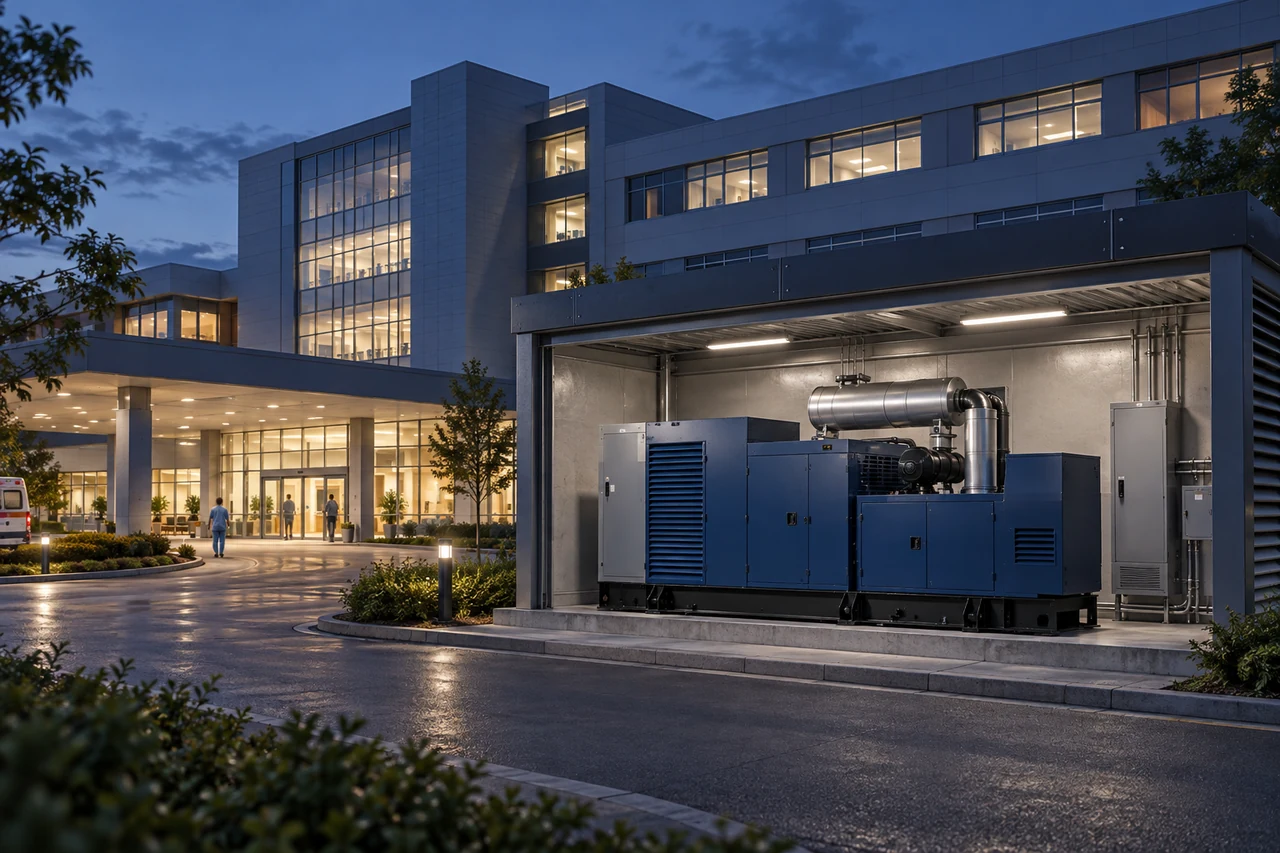
A healthcare backup-power enquiry should begin with the facility’s electrical design and acceptance requirements. Hospitals, clinics and other medical facilities have different loads and risk profiles. Selecting a generator by building size or a generic “hospital” label cannot establish that the complete installation meets the project’s needs.
Provide the approved load specification
The design team should identify the loads to be supplied, their priorities and the permitted interruption for each group. Include motor starting, electronic loads and the sequence in which equipment will be connected. Separate normal demand from the most demanding transition event.
Identify loads supported by UPS or another bridging system. A generator and transfer system involve a start and transfer process; they should not be described as providing zero interruption to every medical device.
Define system interfaces and site conditions
Provide the required voltage, frequency, phase, duty rating and electrical single-line diagram. State the proposed transfer, paralleling or redundancy arrangement. The project engineer should define the capacity needed when a unit is unavailable, rather than applying one standard spare-capacity percentage.
Include temperature, altitude, ventilation, exhaust, fuel storage and noise constraints. The equipment proposal should be reviewed with the building systems and the facility’s maintenance-access requirements.
Agree evidence and acceptance criteria
State the applicable local requirements, standards and editions in the project specification. Ask for documents relevant to the exact offered model and configuration. An engine-brand name or a generic certificate does not by itself establish facility compliance.
Define the required start/transfer performance, load tests, alarm checks and integrated system tests with the project team. Set out who will conduct and witness them, what measurements are required and how outstanding defects will be closed.
Prepare an enquiry package
- Approved load schedule and supply priorities.
- Single-line diagram, operating sequence and redundancy objective.
- Site conditions and fuel-duration requirement.
- Applicable project requirements and acceptance-test criteria.
- Required manuals, drawings, training and maintenance handover.
Use NPC’s healthcare application information to frame the equipment enquiry. Send NPC the facility specification for review of the proposed generator package. The facility’s qualified design and commissioning teams remain responsible for assessing the complete installation against the agreed requirements.