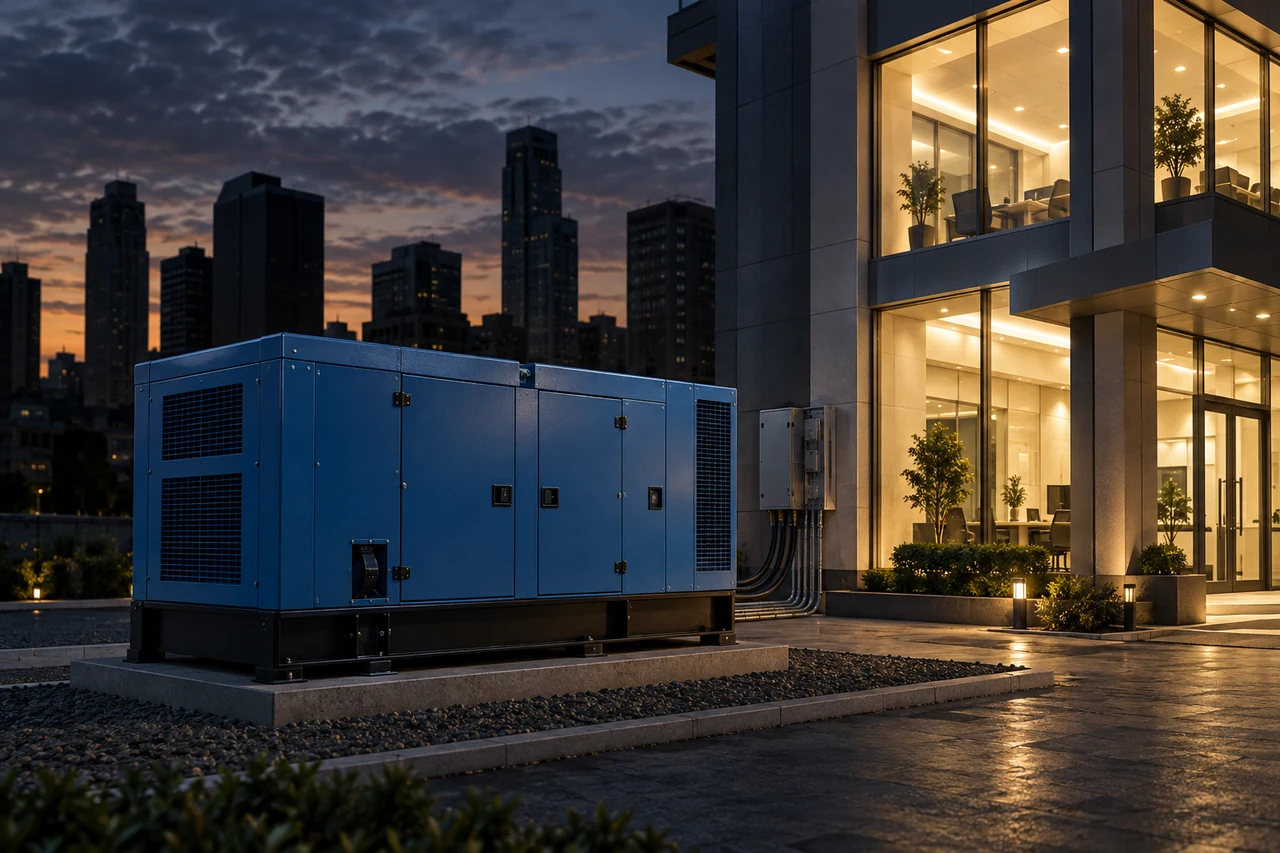
An automatic diesel backup system follows a sequence when utility power fails. Understanding that sequence helps you decide which equipment can wait for generator power and which equipment needs support throughout the interruption.
Detect the utility problem
The configured control system monitors the normal supply. When it detects an unacceptable condition, it applies the specified logic and delays before requesting a generator start. The exact arrangement depends on the controller, transfer equipment and electrical design.
A brief utility disturbance and a sustained outage may therefore produce different responses. The system’s settings should reflect the facility’s requirements and the equipment manufacturer’s instructions.
Start and establish generator output
The starting system turns the engine, and the engine builds speed. The governor and excitation system establish frequency and voltage. The generator must meet the transfer system’s configured acceptance conditions before it supplies the planned load.
Starting time is only part of the total interruption. Detection delays, output acceptance, switching and load sequencing also matter. Ask for the specified performance of the complete system instead of assuming a universal number of seconds.
Transfer and add the planned loads
The transfer equipment changes the load’s source according to its designed sequence. Many installations interrupt the connection briefly during transfer. Other arrangements have different requirements and need appropriate switchgear and engineering.
Consider a business with computers, lighting and an air-conditioning compressor. A correctly designed UPS may support the selected computers during the transfer interval. Lighting can then receive generator power, while the compressor starts in a planned later step. The sequence must match the actual load assessment.
- Which loads must remain powered during the gap?
- Which loads may restart after transfer?
- Which large loads need staged starting?
- Who will verify the sequence during commissioning?
Return to utility power
After the normal supply returns and satisfies the configured conditions, the system transfers back. The generator may then run for an appropriate cooling period before stopping, following its instructions. Alarm and event records help the operator review what happened.
An automatic-start controller alone does not establish a complete automatic transfer system. Explore NPC generator sets and describe your outage and transfer requirements to NPC so the quoted scope is clear.