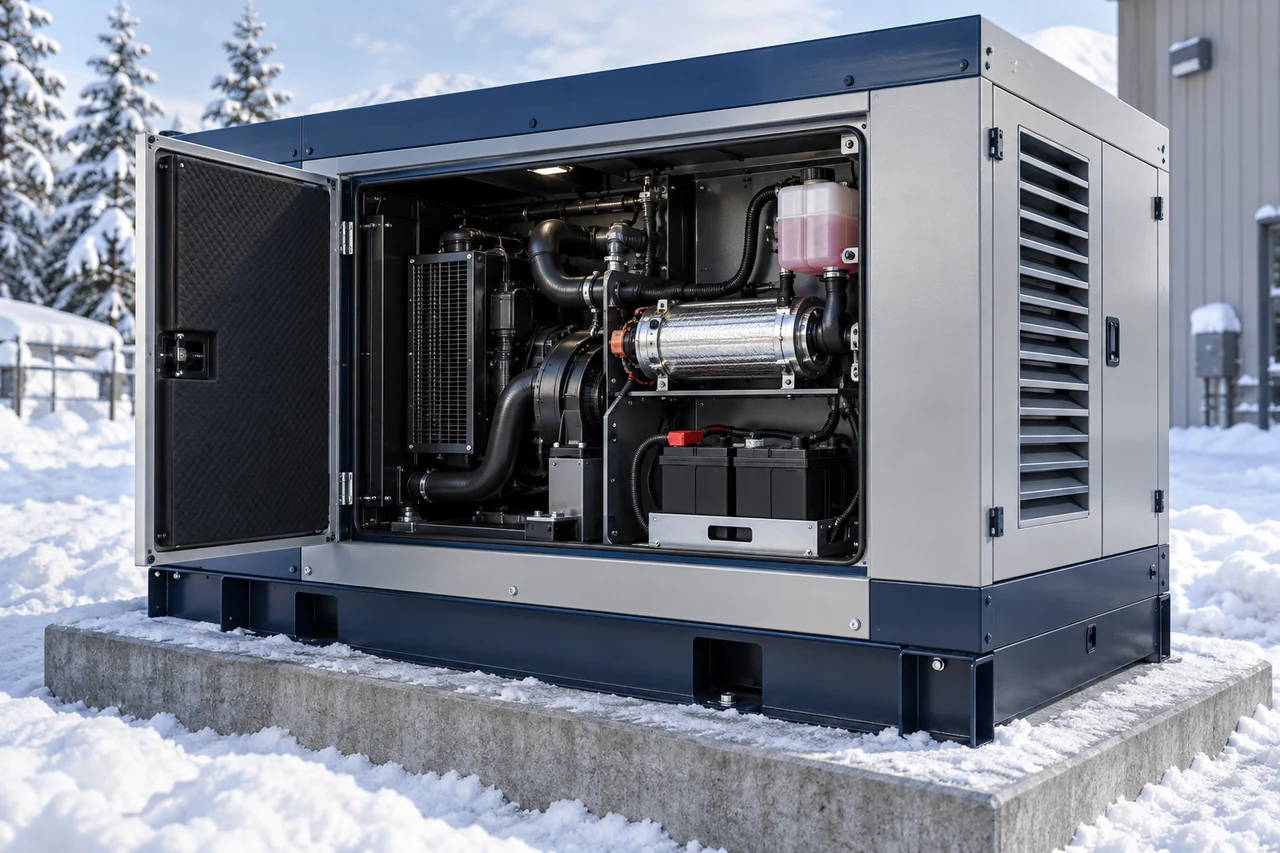
Cold-weather starting begins with the conditions the generator will actually face. An engine that starts well in a warm workshop may need a different approved preparation for an exposed winter site. Record the lowest expected temperature, overnight standby periods and the power available for auxiliary heaters before choosing a configuration.
Battery and starting system
The starting system must suit the engine model and cold-start requirement. Confirm the specified battery type, capacity and charging arrangement with the supplier. A panel voltage reading alone does not establish that a battery can deliver the required starting current.
Keep records of battery age, charger indications and previous slow-cranking events. Have a qualified technician assess battery condition and connections using the manufacturer’s procedure. Observe the permitted cranking duration and rest periods; repeated attempts can create another problem without resolving the first one.
Fuel suited to the season
Ask the fuel supplier about the fuel’s suitability for the expected temperature, including its cold-flow characteristics. Record the delivered grade, delivery date and any approved treatment. Fuel in an outdoor tank and supply line may experience colder conditions than fuel inside a heated room.
Use only additives or fuel-heating arrangements accepted for the engine and installation. Do not improvise thawing methods with flames, hot-air tools or unapproved starting fluids.

Oil, coolant and approved heating
Low temperature affects lubricant flow and starting resistance. Select the oil specification and viscosity from the engine manual’s temperature guidance, rather than copying a grade from another generator. Check the approved coolant mixture and freeze protection through the service team.
Depending on the model, the project may need a coolant heater, battery heating or other factory-approved equipment. Confirm supply voltage, installation requirements, controls and how the heater’s condition will be checked.
Build a winter readiness record
- Generator and engine model, serial number and manual revision.
- Lowest site temperature and whether the unit is indoors or exposed.
- Fuel grade, oil specification and coolant-service record.
- Battery and heater inspection results, plus any starting alarms.
When reviewing NPC generator configurations, include this information so the cold-weather requirements can be assessed for the actual model. Contact NPC with the site details and the required duty rating before finalising a winter package.