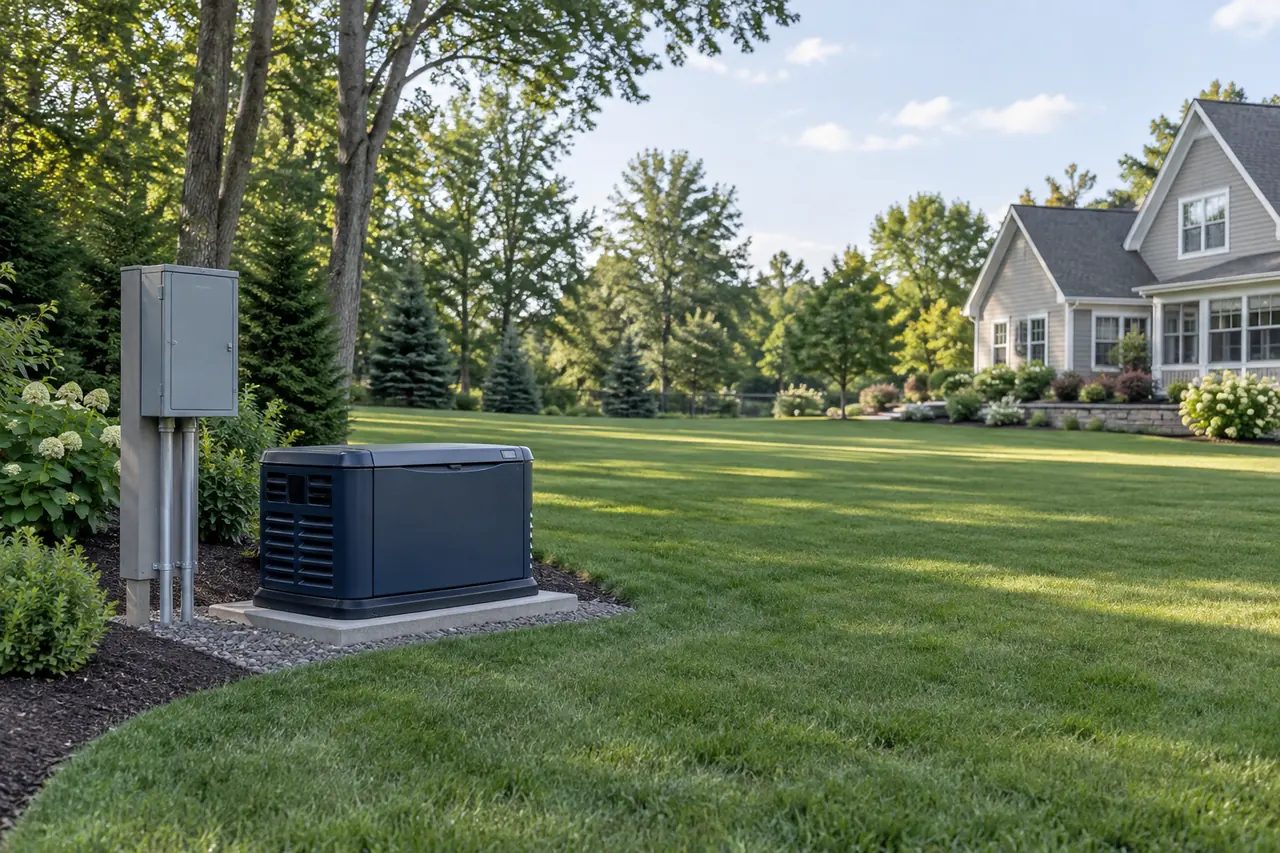
An automatic standby system uses generator controls and transfer equipment to respond to loss of the normal power source. Understanding the sequence helps owners distinguish an automatic engine start from the moment their equipment receives generator power.
1. The system detects an unacceptable source
The transfer controller monitors the normal supply according to its configured sensing functions. When the supply falls outside the accepted conditions, a time delay may begin before a start signal is sent.
The exact settings depend on the equipment and application. They should be agreed and commissioned by the responsible installer rather than assumed from a generic diagram.
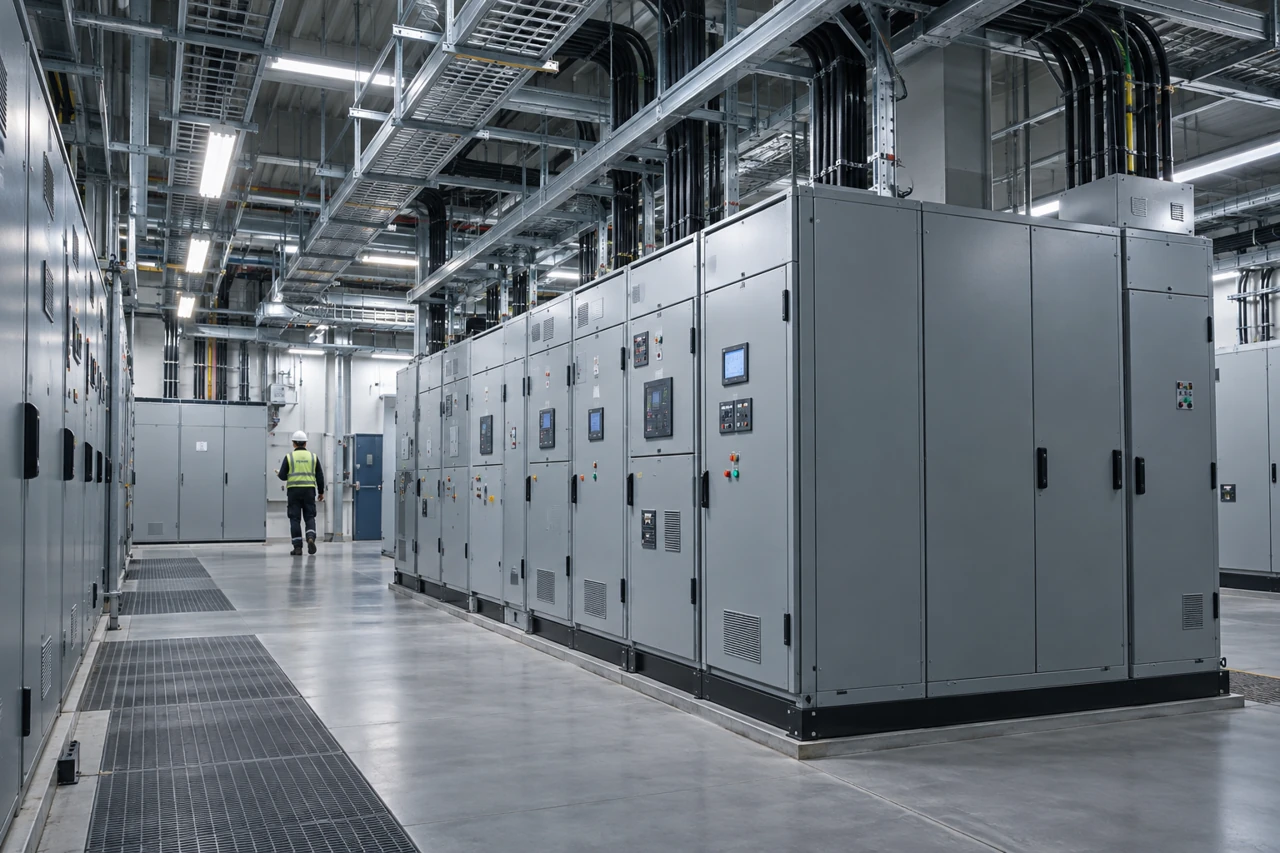
2. The generator starts and establishes output
The generator controller initiates the engine-start sequence. The engine drives the alternator, and the system checks that the resulting voltage and frequency are acceptable before connecting the designated loads.
Starting conditions, configuration and controls affect this interval. An automatic system does not provide instantaneous or no-break power. Loads that must remain powered during starting need separately designed support, such as a suitable UPS.

3. Transfer equipment connects the load
Once the required conditions and delays are satisfied, the transfer equipment selects generator supply for the circuits included in the system. An ordinary open-transition arrangement disconnects one source before connecting the other.
Load steps or load-management functions may be used where specified. Their purpose and settings depend on the design. Automatic transfer does not mean every circuit in a building is necessarily backed up.

4. Normal power returns
After the controller detects acceptable normal power, a retransfer delay can allow that source to stabilise. The equipment then returns the designated loads to normal supply.
The generator may continue running without those loads for its configured cooldown before stopping. This return sequence can also interrupt supply in an open-transition system, which matters to sensitive equipment.
5. The system remains ready
Owners still need a maintenance plan, suitable fuel arrangements and periodic checks following the supplied manuals. Ask for commissioning records and an explanation of alarms and operating modes at handover.
Review NPC generator options and discuss the required automatic-start configuration. Share the transfer-equipment specification with NPC and your installer so the interfaces and supply responsibilities can be confirmed.