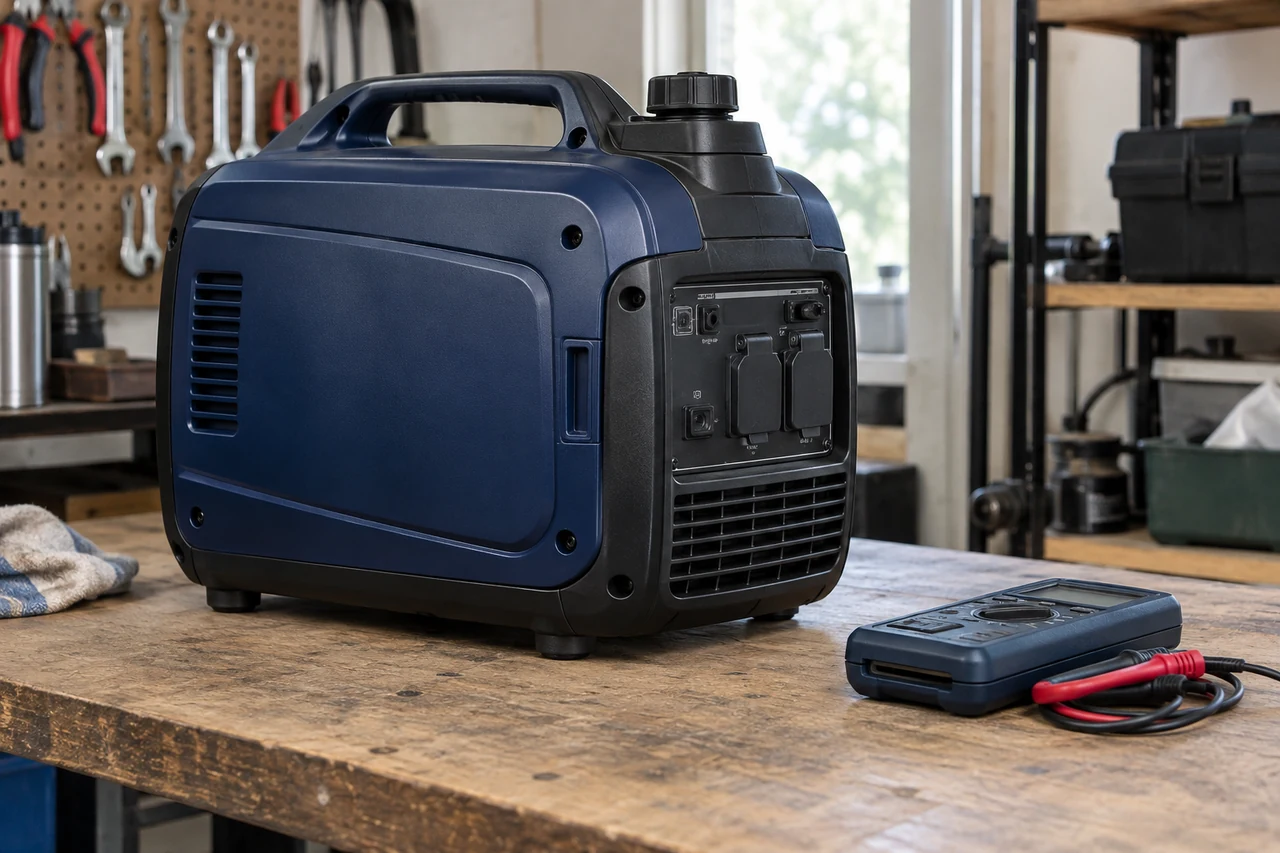
Variable-speed generation describes a system in which the engine or another prime mover can operate over a designed speed range. An inverter can allow the electrical output frequency to remain controlled while engine speed changes. These are system concepts; they should not be assumed features of every diesel generator.
Understand the conventional speed link
In a conventional synchronous generator, the engine drives the alternator and the output frequency is related to rotational speed and the alternator’s pole count. The governor regulates engine speed as the load changes. Voltage regulation is a separate function.
A conventional set cannot simply be slowed down to save fuel while supplying its normal frequency. Its engine, alternator, excitation and protection are designed to work within specified operating limits.
Follow the power-electronics path
One common inverter-generator arrangement converts the alternator’s AC output to DC, then uses an inverter to produce the required AC output. In this arrangement, the inverter controls the final waveform and frequency rather than passing the alternator’s changing frequency directly to the load.
A simple conceptual path is: engine → alternator → rectifier/DC link → inverter → electrical load. It describes an architecture, not a modification guide. Actual equipment can use different designs and control strategies.
Separate the possibilities from the limits
A designed variable-speed system may change engine speed with demand. The result depends on its controls, permissible speed range, cooling, output rating and the connected load. It does not mean that output voltage and frequency should vary arbitrarily with the equipment being supplied.
Claims about fuel use, noise or electrical quality need model-specific figures and test conditions. A variable-frequency drive supplying a motor is also a different application from an inverter generator supplying a building.
Confirm the model before specifying it
- Does the output pass through an inverter?
- Is engine speed fixed or controlled over a stated range?
- What are the rated voltage, frequency, duty and output limits?
- What power-quality and load-response data are available?
- What service support does the complete system require?
Use the actual data sheet when reviewing NPC generator options. Ask NPC about the proposed configuration and confirm its architecture before including variable-speed or inverter performance in a project specification.