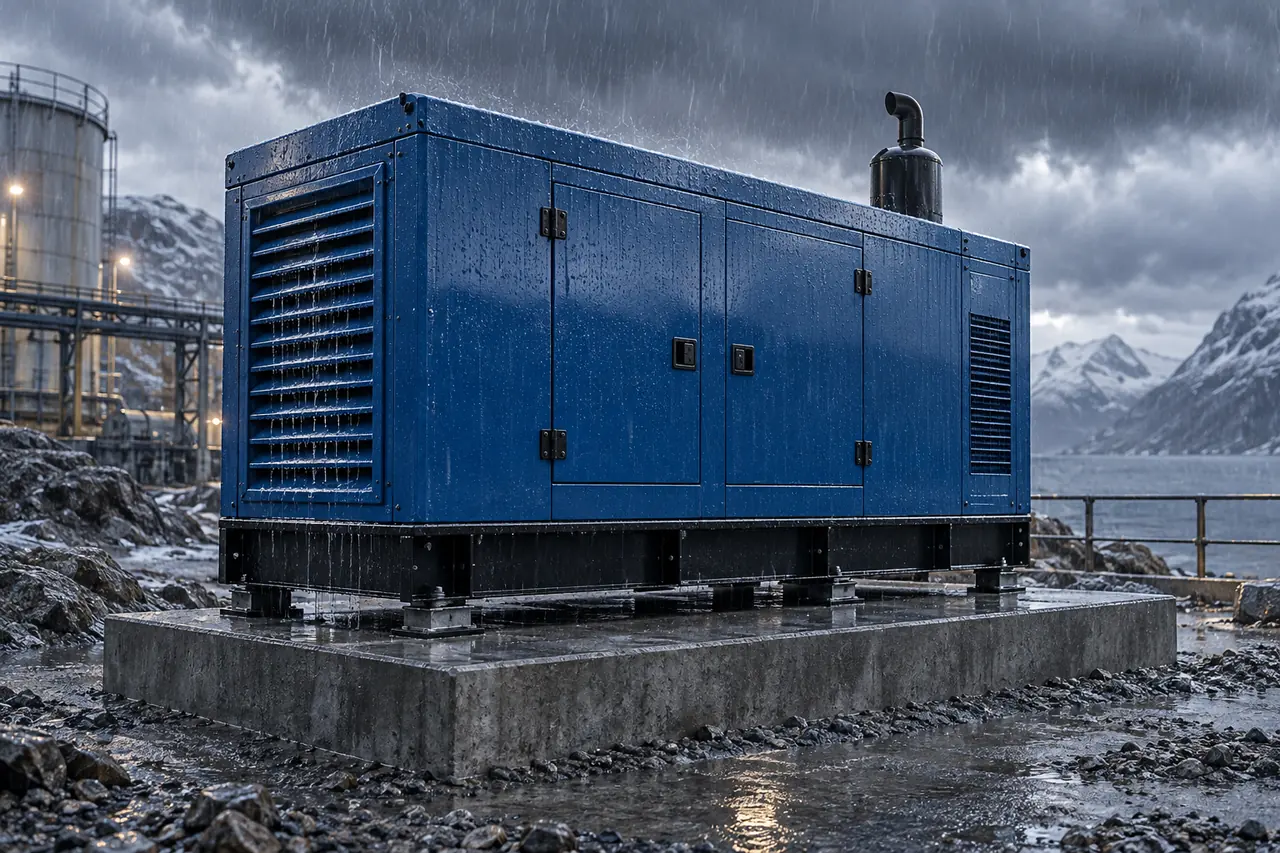
A generator enclosure does not make a set suitable for every climate. Weather planning starts with the site’s actual temperature, water exposure, dust and wind conditions, then checks the offered package and installation against them.
Describe temperature and altitude
Provide expected minimum and maximum ambient temperatures and the site’s altitude. Confirm the available engine and alternator output under those conditions. Use the offered model’s data rather than a universal derating percentage.
Cold-start provisions may include specified heaters, batteries, coolant, oil and suitable fuel. Their requirements depend on the engine and climate. Also identify how any heater or battery charger receives power while the generator is waiting.
Manage rain, drainage and flooding
Ask what weather protection the quoted enclosure provides and what exposure it is designed to handle. Plan the foundation, drainage and equipment location with site specialists. Consider where rainwater can collect and whether floodwater could reach electrical or fuel equipment.
Weatherproofing must preserve the manufacturer’s required airflow and service access. Do not cover ventilation openings with improvised barriers. Exhaust routing also needs to account for nearby doors, windows and air intakes.
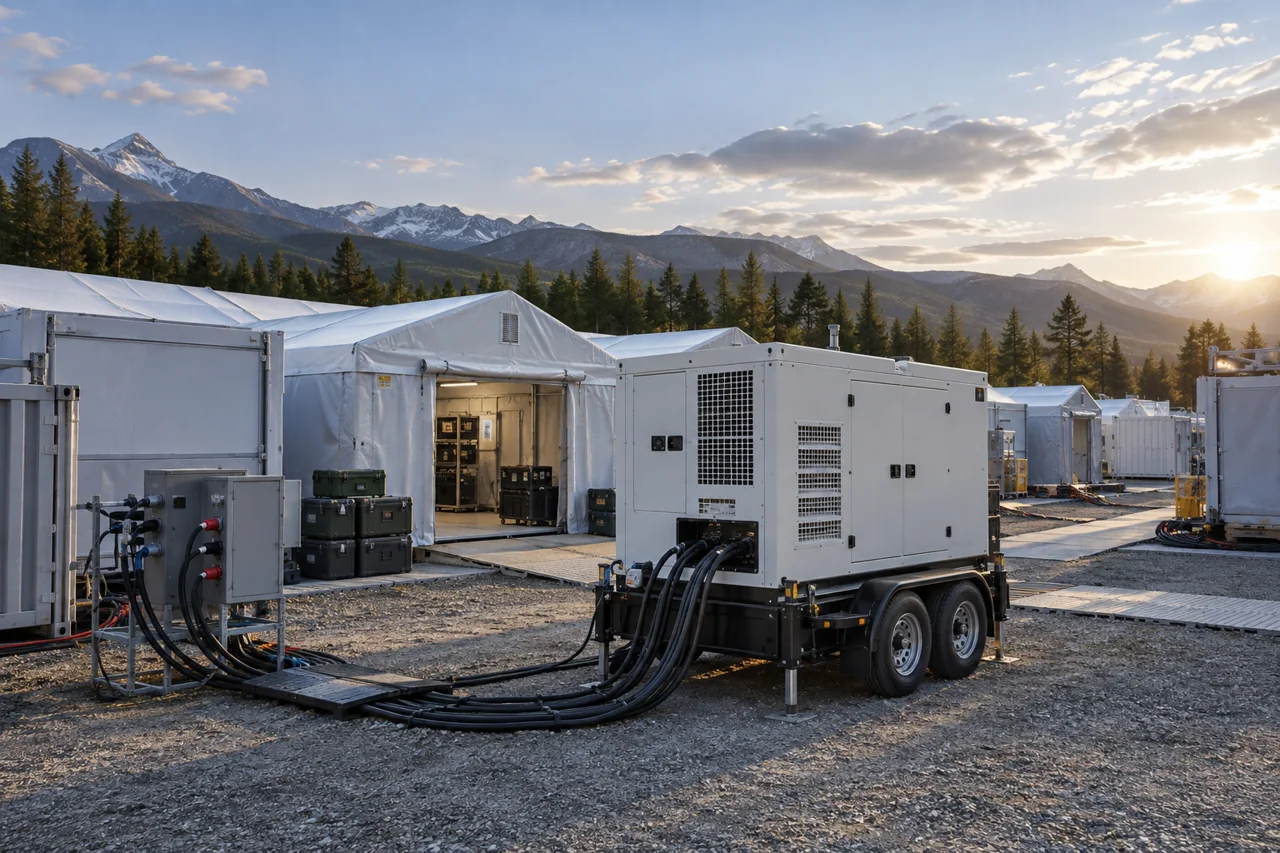
Consider dust, wind and corrosion
Dust can affect air filters and cooling surfaces, while strong winds can change the behaviour of ventilation and exposed components. Coastal environments may require additional corrosion protection and inspection arrangements.
For example, a dusty construction site may need a different filter-service plan from a sheltered commercial installation. A coastal site may prioritise coating specifications and access for cleaning. Neither condition is addressed simply by choosing a set described as enclosed.
- Temperature range and altitude.
- Rain, snow, flood and drainage exposure.
- Dust or salt conditions.
- Wind exposure and proposed orientation.
- Access for inspection, service and refuelling.
Confirm the complete installation
Request package drawings and the limits relevant to airflow, cooling, exhaust and environmental exposure. Have the installation designer review added shelters, ducts or screens; these can alter conditions around the set.
Browse NPC generator configurations and send NPC the site conditions and proposed location to discuss appropriate package options. Confirm their documented limits before finalising the installation.