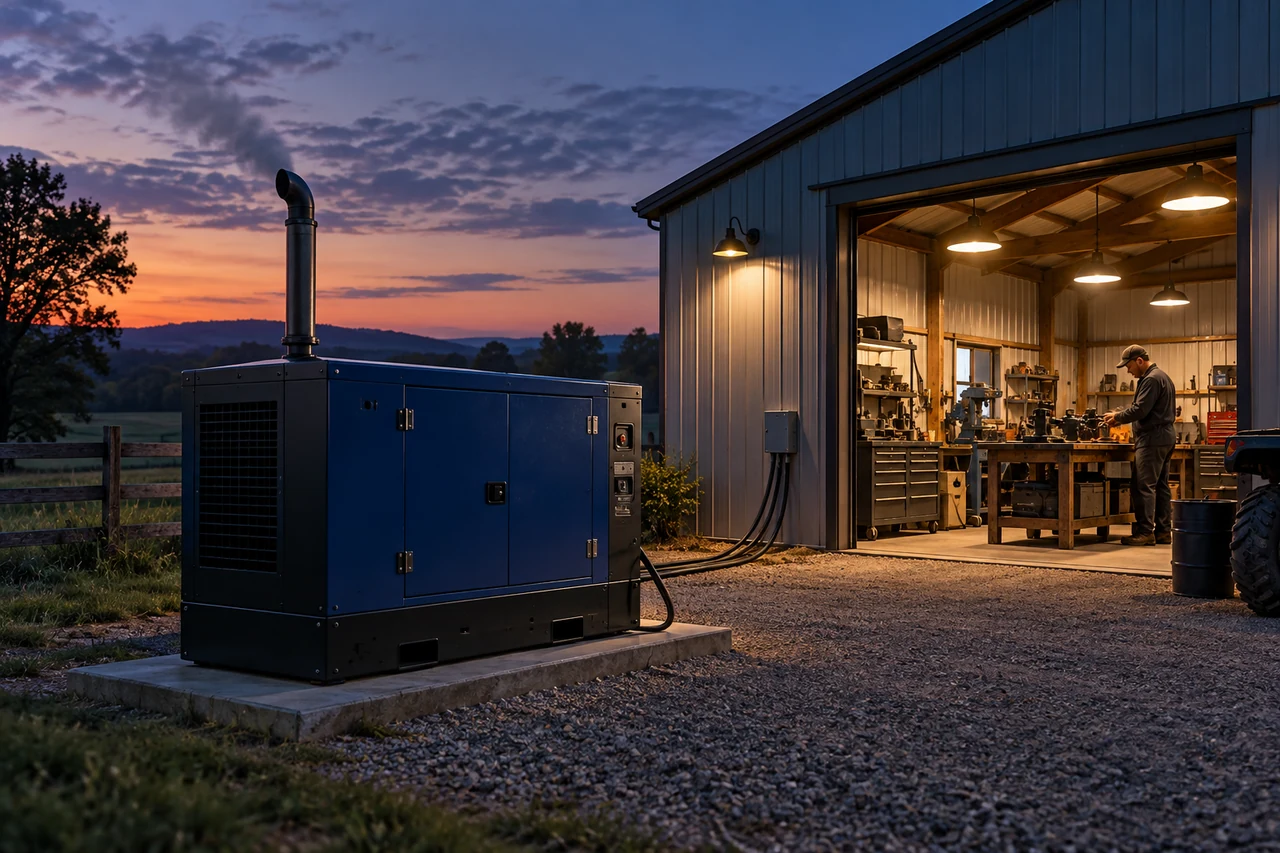
A backup generator can support the loads included in a suitable system design, within the selected set’s electrical and operating limits. The useful question is which equipment your site needs during an outage and how that equipment behaves when power is restored.
Household essentials
A home backup list might include refrigeration, selected lighting, a router, heating controls and a well or sump pump. Electric cooking, water heating and air conditioning may add substantial demand, so decide which loads are essential before asking for a size.
A refrigerator’s normal running input does not describe its compressor start. A pump may also restart while other appliances are already running. Identify those events rather than assuming every appliance draws the same power continuously.

Commercial operations
A small business might prioritise refrigeration, point-of-sale equipment, communications and selected lighting. A workshop could prioritise one production machine and an extraction system. Your operational priorities determine the backup list.
Check how equipment restarts after an outage. Several refrigeration compressors or HVAC units restarting together may create a larger initial demand than expected. Sensitive information systems may also need UPS support during the generator’s starting and transfer interval.
Temporary works and construction sites
A temporary site may need lighting, pumps, battery chargers and selected power tools. Welders, cranes and larger motors can require more detailed electrical information than a simple running-watt total provides.
Describe the work sequence and the equipment likely to operate together. If the generator supplies the site every working day, explain that operating pattern rather than requesting an occasional-backup specification. Movement between sites can also change the voltage, connection and environmental requirements.

Turn the examples into your own load list
For each load, record quantity, electrical input, starting information and priority. Add voltage, frequency and phase. Mark loads that can be delayed or disconnected so the system designer can assess realistic operating combinations.
These examples do not assign universal generator sizes to a home, shop or work site. Explore NPC generator power ranges after identifying your actual equipment. Send NPC the backup-load list with expected operating hours and your installer’s requirements to discuss an appropriate configuration.