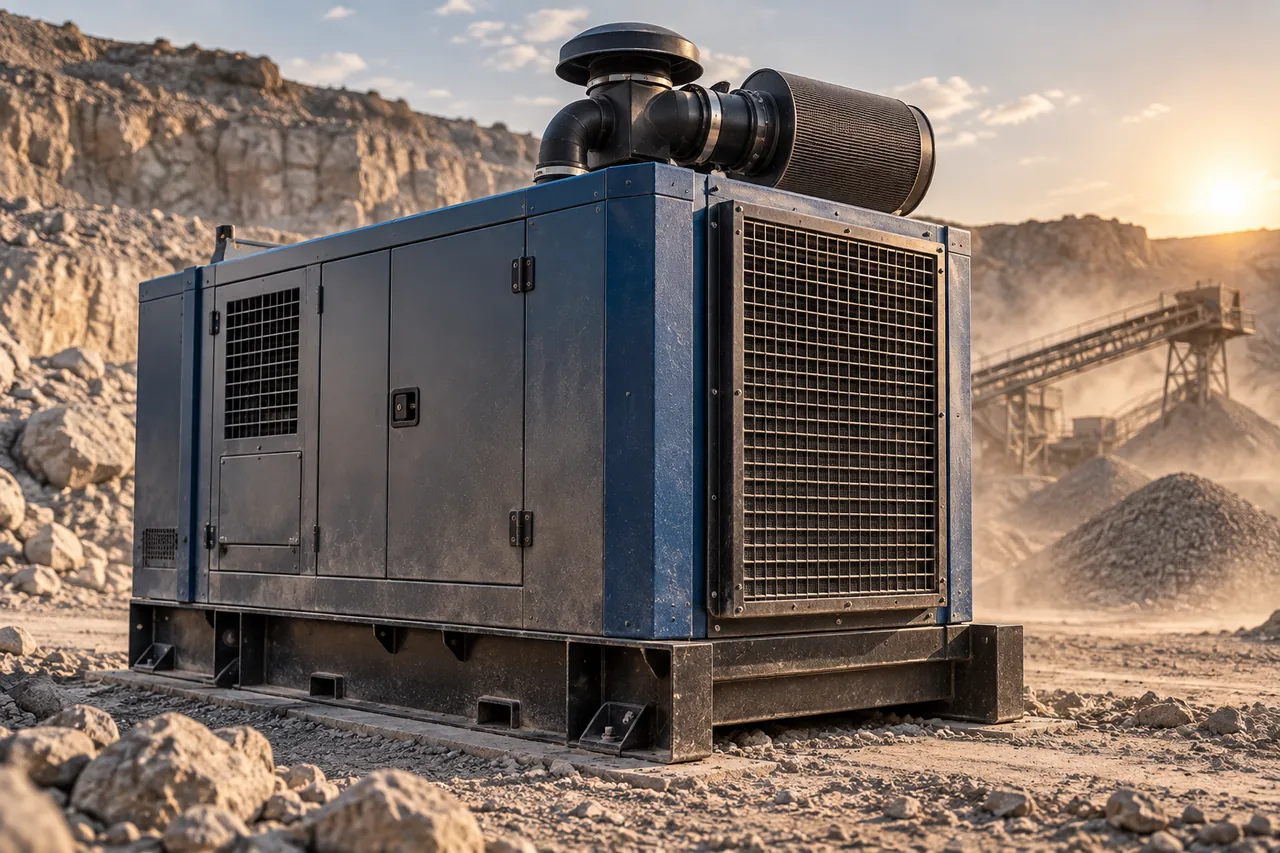
The location of a generator affects the configuration it needs and the power it can supply. A catalogue rating should be checked against the site’s temperature, altitude, air quality and installation layout. Providing those details early helps the supplier assess the engine, alternator, cooling system and enclosure together.
Define temperature at the equipment
Record the expected minimum and maximum temperatures, not only the annual average. For a generator room, the air reaching the cooling system may be warmer than the outside weather report. Include other equipment, sun exposure and nearby hot-air outlets in the site description.
High-temperature operation requires review of the model’s cooling and rating limits. Cold sites may need approved starting aids and heating options. The required package depends on the actual engine and installation; a heater or radiator upgrade should not be assumed standard.
Include altitude in the rating review
Give the site’s elevation above sea level. Engine and alternator performance can be affected by altitude and temperature, and the permitted output must be checked for the selected model. Do not apply an arbitrary percentage reduction copied from a different generator.
Ask for the proposed rating at the stated site conditions, including any adjustment and its basis. Confirm that the resulting output still meets the load and starting requirements.
Describe dust and other contaminants
Explain whether the site has windblown sand, cement dust, fibres, salty air or persistent humidity. These conditions can affect intake filtration, cooling surfaces, corrosion protection and maintenance access.
Photographs of the proposed location help show exposure and nearby processes. Ask about appropriate filtration and maintenance guidance. Adding dense screens or sealing ventilation openings without engineering review can restrict airflow and create a different problem.
Send a site conditions sheet
- Location and altitude.
- Seasonal minimum and maximum temperature.
- Indoor room or outdoor position, with intake and discharge layout.
- Dust type, salt exposure, humidity and nearby exhaust sources.
- Required duty, load sequence and maintenance-access constraints.
For example, an elevated quarry with cement dust needs a different assessment from a coastal standby installation, even when both request the same nominal power. Use NPC generator configurations to identify a starting option, then send NPC the site conditions sheet for a model-specific review before confirming the selection.