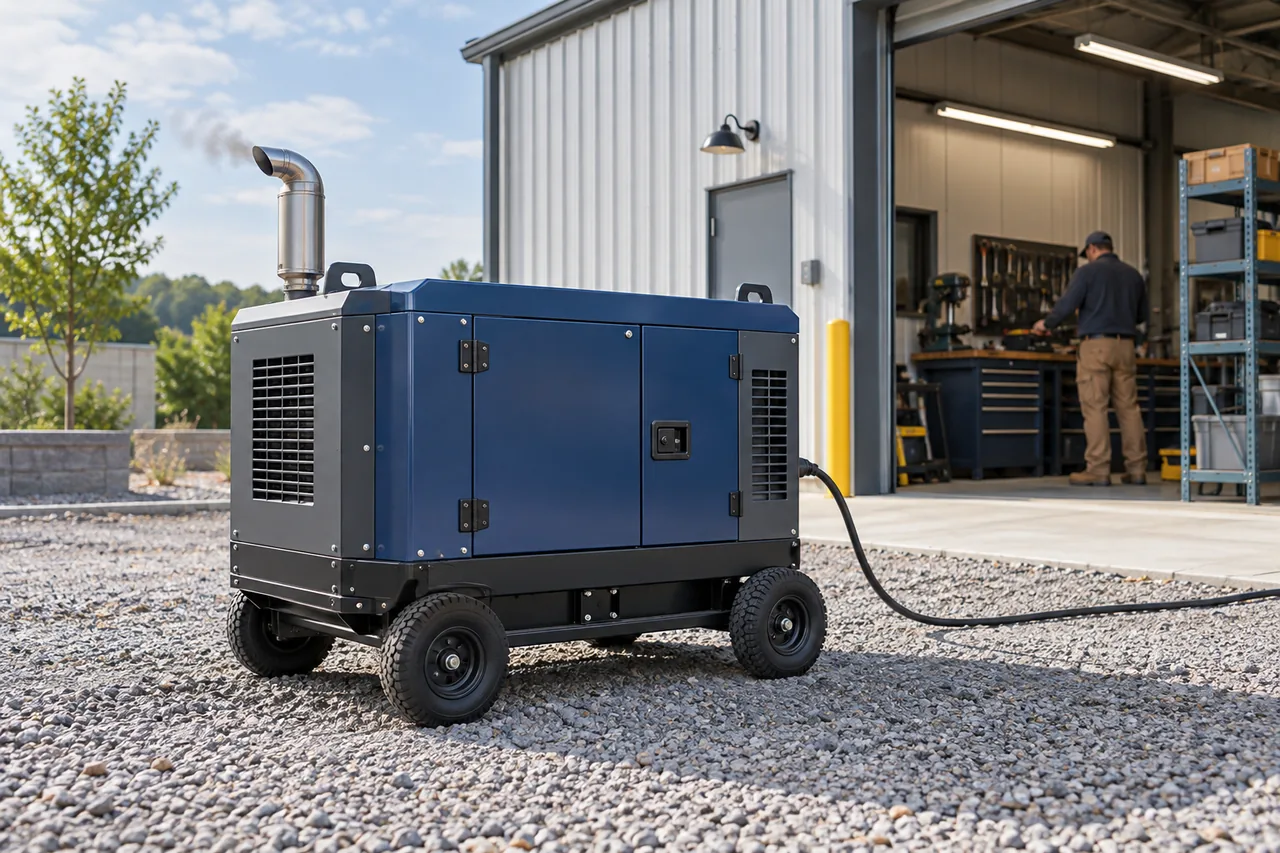
“Portable” can describe very different generator arrangements. A small unit that can be carried, a heavier set moved with lifting equipment and a generator fitted to a trailer all have different handling and installation needs. Choose from the actual specification and load list, rather than the label alone.
Confirm how it will move
Check dimensions, dry and operating weight, approved lifting points and the required handling equipment. Fuel, batteries and accessories can change transport weight. A wheel kit does not establish that one person can safely move the generator across a rough worksite.
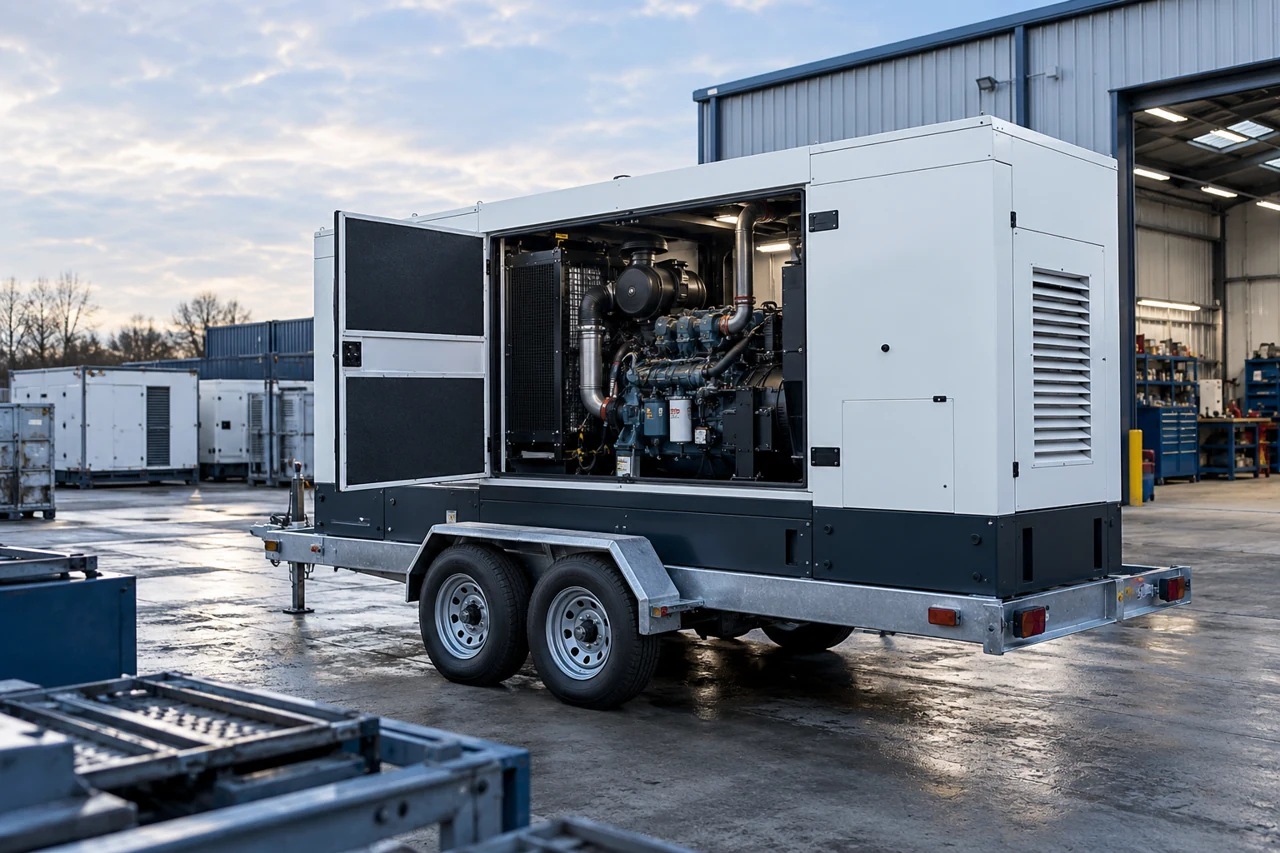
For a trailer configuration, verify the supplied trailer specification and the transport requirements that apply locally. Ask who will position and secure the unit, and whether access routes can accommodate the complete package.
Describe the loads accurately
List the equipment that must run together, its voltage and phase, and its normal demand. Motors, compressors and pumps can require more power during starting than while running. Give the supplier motor details and starting methods instead of relying only on appliance wattages.
Clarify whether the unit will supply individual tools or connect to a building’s electrical installation. Building connections need an engineered arrangement installed by qualified personnel; do not connect a generator through a wall socket.
Check the working environment
A portable generator still needs a safe operating location. Exhaust contains carbon monoxide, so carryable fuel-powered units must operate outdoors with exhaust directed away from occupied areas and openings. Rain protection must follow the manual and must not trap exhaust or obstruct cooling.
Review noise figures with their stated distance and load, and confirm the model’s environmental limits. Plan safe cable routing, fuel storage and refuelling after shutdown and cooling as instructed. Requirements vary with the equipment and site.
Prepare a practical enquiry
- Load list, motor starting information and required voltage/frequency.
- Hours of use and whether the duty is temporary, prime or standby.
- Transport method, site access and available lifting equipment.
- Temperature, dust, rain exposure and noise constraints.
- Connection method to be reviewed by the installer.
Browse NPC generator power ranges as a starting point, then confirm the weight and mobility configuration for the proposed model. Contact NPC with the load and transport requirements so the enquiry addresses the complete working arrangement.