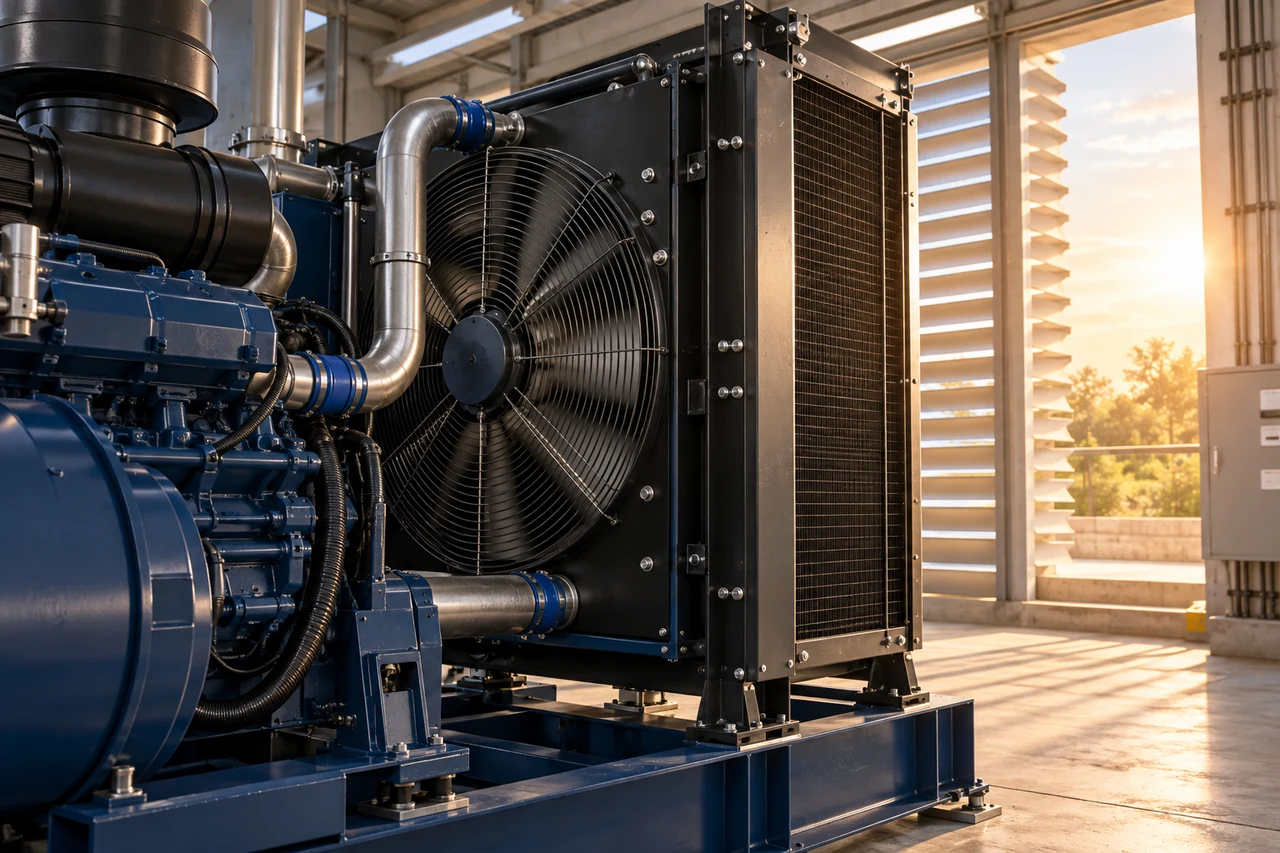
A high-temperature warning or shutdown needs a clear record of what the generator was doing when it occurred. The displayed value, alarm sequence, load and site conditions help a technician separate an installation problem from an equipment or maintenance issue. An alarm by itself does not establish the failed part.
Respond according to the alarm and manual
Follow the generator’s operating instructions and the site’s approved response procedure. A warning and a protective shutdown can require different actions. Do not keep restarting a set that has shut down on temperature, override its protection or assume it should continue idling.
Keep clear of hot surfaces and moving components. Do not open a hot cooling-system cap: pressurised coolant can cause serious burns. Visible steam, a major leak or another immediate hazard should be handled under the site’s emergency procedure.
Capture operating conditions
Photograph or copy the alarm text, timestamp and displayed temperature from a safe location. Record the start time, time until the alarm, kW or load reading if available and whether equipment had recently started or stopped.
Record outside temperature and, where already measured, the temperature of air entering the cooling system. A normal weather reading does not rule out hot-air recirculation inside a room or between closely positioned sets.
Describe airflow and maintenance history
From a safe position, note blocked external air openings, nearby stored materials, changed louvers or a new wall close to the discharge. Do not reach into the fan area or remove guards to investigate while the unit can start.
Provide coolant-service details, previous leaks, radiator inspections and recent repairs. The technician can then check the cooling components and installation against the exact model limits. Cleaning methods, coolant selection and component tests must follow the manufacturer’s guidance.
Send a useful overheating brief
- Model, serial number, controller and engine hours.
- Exact warning/shutdown text and sequence.
- Load, temperature and time from starting to the event.
- Airflow layout photographs and recent site changes.
- Coolant and maintenance records.
Keep this brief with the specification for your NPC generator set. Contact NPC with the records and confirm the service route before returning a repeatedly overheating generator to normal operation.