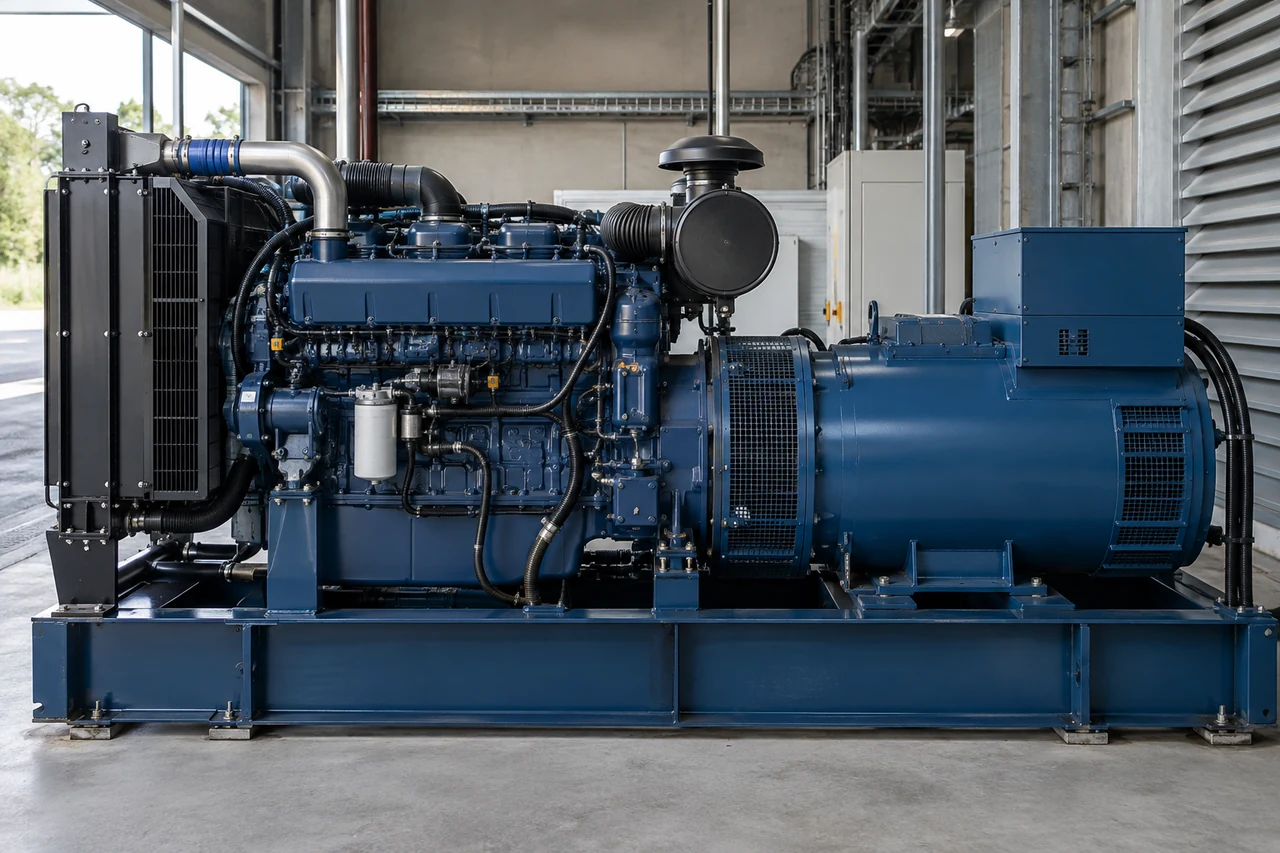
A diesel generator follows an energy path: fuel supplies chemical energy, the engine produces shaft power, and the alternator produces electrical output. Understanding this path helps explain why engine controls and electrical controls have different jobs.
Fuel supplies energy to the engine
The fuel system delivers diesel to the engine’s injectors. Fuel burns in the cylinders, creating the force that moves the pistons. Connecting rods and the crankshaft turn that motion into rotation.
Some fuel energy becomes useful shaft power; other energy leaves as heat through the cooling system and exhaust, with further mechanical losses. A generator cannot turn all the energy in its fuel into electrical output. Fuel consumption therefore needs model-specific data at a stated load.
The shaft drives the alternator
The engine is mechanically coupled to the alternator. In a typical synchronous alternator, a rotating magnetic field induces alternating voltage in the stationary windings. When an appropriate load is connected, electrical current flows through the output circuit.
The alternator also has losses and needs cooling. Its electrical capacity must suit the load’s voltage, phase, current and power characteristics. A larger engine alone does not establish that an unchanged alternator can supply a higher electrical load.

Controls respond to changing demand
During standalone operation, the governor adjusts engine fuel delivery to manage speed and frequency. The automatic voltage regulator adjusts excitation to manage alternator voltage. These control actions work together when equipment starts or stops.
For example, starting a water pump increases demand on the alternator and then on the engine shaft. A suitable generator must handle the brief starting condition as well as the pump’s running demand. The response depends on the complete package and the pump’s starting method.
Connect the principle to your specification
- Engine: confirm the model, duty rating and fuel requirements.
- Alternator: confirm electrical output and load suitability.
- Supporting systems: allow for cooling, exhaust, starting and service access.
- Controls: confirm the operating and protection functions included.
Compare generator electrical output figures with generator electrical output figures, rather than engine mechanical power figures. Keep the duty and site conditions attached to each rating.
See NPC generator configurations and share the equipment you need to power when requesting a suitable set.