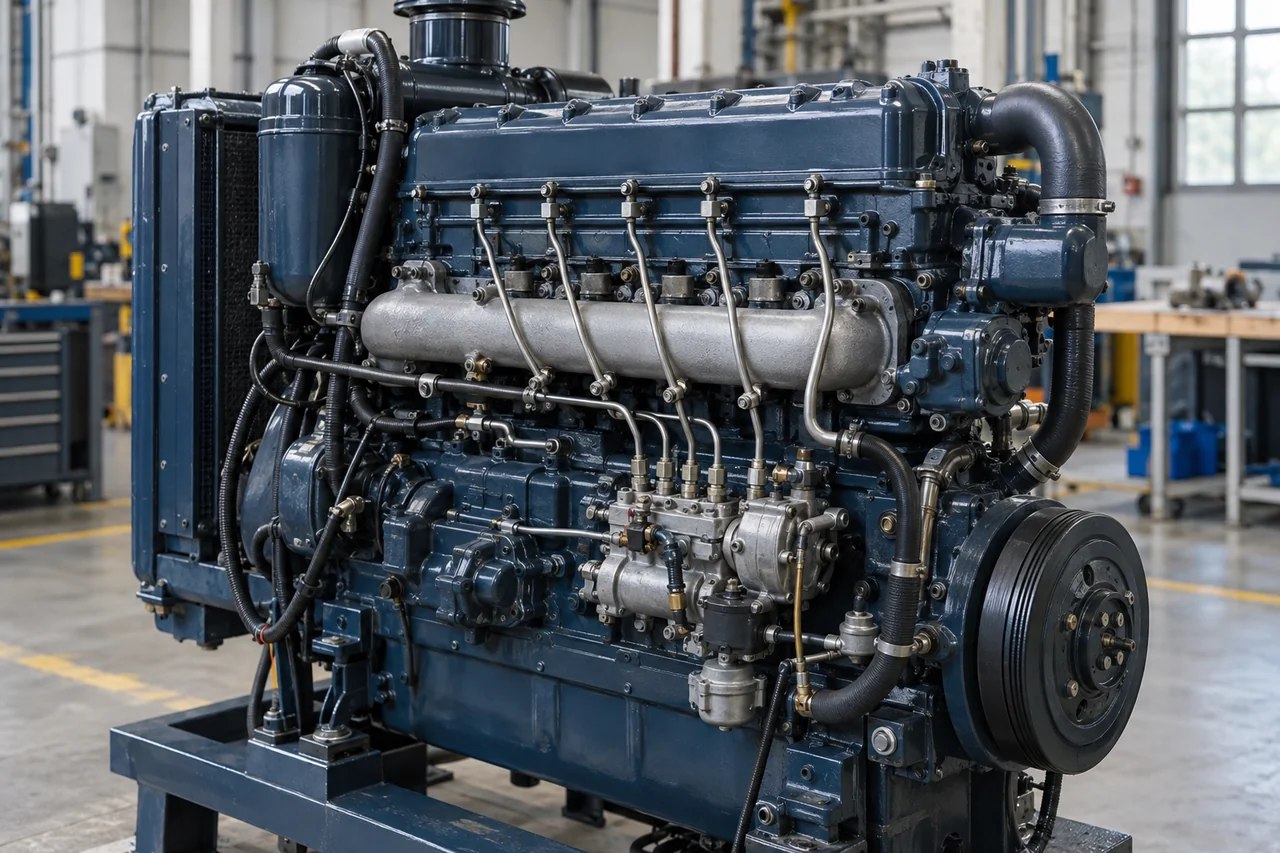
A four-stroke diesel engine repeats four piston movements to produce mechanical power: intake, compression, power and exhaust. One complete cycle in a cylinder takes two crankshaft revolutions. In a generator set, that rotating shaft drives the alternator.
Intake: bring air into the cylinder
During intake, the piston moves down and air enters through the intake valve. The engine’s air filter helps keep damaging contamination out. On a turbocharged engine, the intake system also includes equipment that supplies compressed air.
For a generator owner, the practical connection is airflow. The engine needs the specified intake arrangement, and the installation must also provide adequate cooling ventilation. Covering openings to keep out weather can interfere with these requirements.
Compression: raise the air temperature
The piston moves upward with the valves closed for the main compression stage. Compressing the air raises its temperature. Diesel engines use this heat to ignite fuel injected into the cylinder, rather than a spark plug to initiate normal combustion.
Starting conditions still matter. The selected engine may require particular cold-start provisions, oil and fuel specifications. These are model and environment questions, rather than conclusions that can be drawn from the four-stroke principle alone.

Power: turn combustion into rotation
Fuel is injected near the end of compression. Combustion raises pressure, and expanding gases push the piston downward. The connecting rod transfers this force to the crankshaft, producing rotation.
In a multi-cylinder engine, cylinders operate at different points in their cycles. Their contributions, together with the rotating assembly, provide the shaft power used by the alternator. The engine’s control system adjusts fuel delivery as the connected electrical load changes.
Exhaust: remove combustion gases
The piston moves upward again as the exhaust valve opens, expelling combustion gases. The cycle then repeats. In a generator installation, the exhaust system must safely route gases and meet the engine’s specified limits.
The four stages explain why clean air, suitable fuel, lubrication, cooling and unobstructed exhaust all matter. They do not establish a universal service interval or mean that every diesel engine uses four strokes; other diesel engine designs exist.
Explore NPC diesel generator sets and ask NPC about the engine specification for the power duty and site conditions you need.